
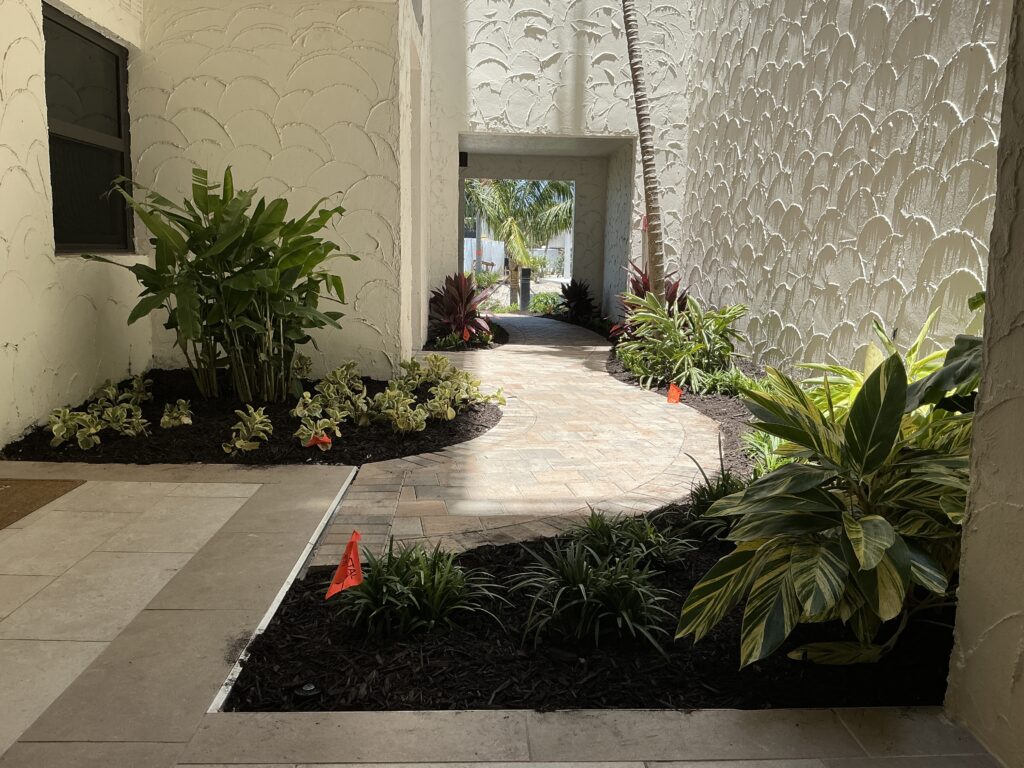
Does Your Southwest Florida Landscape Need New Mulch? What to Check Before a Fall Refresh
A fall mulch refresh in Southwest Florida can give landscape beds a more consistent appearance before seasonal residents return and outdoor activity increases. But deciding how much mulch to install requires a closer look than checking whether the color has faded.
Some beds need replenishment. Others already contain plenty of material and need light attention to the existing layer. Still others have a recurring problem that another delivery will not solve.
Before approving a community-wide installation or refreshing the beds around your home, review the existing depth, the condition of each area, and the work that should happen before new mulch is spread. This helps make the project more useful and the proposal easier to compare.
Why Color Alone Is Not Enough
Mulch serves a purpose beyond making a bed look finished. UF/IFAS explains that mulch helps conserve moisture, suppress weeds, moderate soil temperatures, and protect soil. Organic mulch also breaks down over time.
Appearance and remaining depth therefore need to be evaluated separately. A bed may look tired while still holding enough material. Another may look acceptable from the sidewalk but have thin sections hidden between plants.
If the decision is based only on surface color, it is easy to specify the same application everywhere. A more useful approach is to inspect several representative locations and decide where replenishment is actually needed.
For an HOA or commercial property, ask the contractor to identify those differences before estimating the total quantity.
Check the Existing Depth in More Than One Spot
UF/IFAS recommends maintaining a settled mulch layer of approximately two to three inches around established landscape plants, while keeping material away from trunks and plant bases. The depth already in place counts toward that total.
Check near the front of the bed, between plants, and toward the back. Compare exposed areas with protected sections. A single measurement beside the sidewalk may not represent the whole planting area.
Consider a bed with roughly two inches of existing mulch. Adding another full three inches would create a much deeper layer than intended. The project should specify the desired finished condition, not simply the thickness of the new material.
Record the findings by area. A short set of notes or marked photographs can help explain why one bed needs more material than another.
Distinguish Replenishing From Removing and Replacing
The phrase “replace the mulch” can mean different things to different people. A homeowner might mean improving the appearance, while a contractor might price removal and disposal of the existing layer.
UF/IFAS advises replenishing organic mulch as it settles and decomposes, rather than routinely removing the entire layer, which can disturb shallow roots. Matted material may benefit from light raking.
Discuss the intended approach before work starts. If removal is proposed, ask which areas need it and why. If the plan is to replenish, confirm how the existing depth will be accounted for.
A clear scope prevents misunderstandings about labor, disposal, and the final appearance. It also avoids paying for a full replacement when a more limited refresh would meet the property’s needs.
Address Repeated Trouble Spots Before Ordering More
Does the same section lose its mulch after rain? Does one narrow bed repeatedly spill material onto a walkway? Are crews constantly moving mulch away from irrigation equipment?
Those patterns deserve a site review. Photograph the location and note when the problem occurs. The issue may involve the layout, water movement, an adjacent activity, or the way material was previously installed.
Adding more mulch without reviewing the pattern may leave the property with the same maintenance problem a few weeks later.
Ask whether the refresh should include a small correction to the affected area. If that work requires a separate proposal, identify it before installation so the delivery and crew schedule can be coordinated.
Complete Other Bed Work First
Mulching is often the final visible step in a larger bed improvement. If shrubs will be removed, new plants installed, or irrigation components repaired, complete that work first wherever practical.
This avoids disturbing a freshly finished bed and makes it easier to see the actual area that needs coverage. It also gives the crew a cleaner starting point for the installation.
For communities, coordinate with the account manager and identify access restrictions. Deliveries should not block resident parking, pedestrian routes, or emergency access. Agree on where material will be staged and how the area will be cleaned when work is complete.
These details are particularly useful when a project covers multiple buildings or entrances over several days.
Ask for Quantities That Reflect the Site
A mulch proposal should identify the areas included, the specified material, and the intended finished depth. It should also explain whether quantities are being provided in bags or cubic yards.
The calculation is straightforward: square footage multiplied by the additional depth in inches, divided by 324, gives cubic yards. For example, adding one inch across 1,000 square feet requires about 3.1 cubic yards before practical allowances.
The difficult part is deciding how much additional depth each area needs. Existing mulch, irregular bed shapes, and excluded surfaces affect the estimate.
Compare proposals using the same coverage areas and finished condition. A lower quantity does not necessarily mean less complete work; it may reflect a closer assessment of what is already in place.
Make the Finished Condition Easy to Inspect
Before approving the job, agree on what completion will look like. Specify the material and color, areas included, preparation tasks, and cleanup expectations.
During the final walk, review the beds from both the sidewalk and between plants. Look for uneven distribution, material covering equipment, and locations where mulch has been left against trunks or plant bases.
Photographs of the completed areas provide a useful record for a board or property owner. Keep those images with the proposal so the next refresh can be assessed against the previous work.
Common Questions About a Fall Mulch Refresh
Does every bed need mulch at the same time?
No. A property can have different needs in different areas. Review depth and appearance by location, then decide whether a full refresh or selected replenishment makes the most sense.
Is mulch a substitute for weed management?
Mulch helps suppress weeds, but beds still need monitoring. Agree on weed preparation and follow-up care rather than expecting the installation alone to resolve every existing weed problem.
Can we change the material during the refresh?
Yes, but clarify how the change will be handled. Review existing material, desired appearance, site suitability, and any removal requirements before approving a different product.
Get a Clear Plan Before Refreshing Your Beds
Island Home Service Landscaping provides mulch, rock, and sod installation and ongoing landscape maintenance for Southwest Florida properties.
If your beds need attention this fall, request a complimentary property assessment. We can review the existing material and recommend a refresh based on the condition of your landscape.