
Sugarcane Mosaic Virus in St. Augustine Grass: What Southwest Florida Homeowners Should Know
Changes in your lawn can raise questions, especially when yellowing or thinning continues despite regular care. Sugarcane mosaic virus (SCMV) is one possible cause of decline in St. Augustine grass.
At Island Home Service Landscaping, our goal is to help clients understand what to watch for and when to ask for help. Recognizing a concern is the first step. Finding the cause is what guides the next decision.
What is sugarcane mosaic virus?
SCMV is a plant virus that causes mosaic disease in St. Augustine grass. UF/IFAS has documented it in Southwest Florida, including Fort Myers and Naples. Its presence in the region does not mean every discolored lawn is infected.
In susceptible varieties, infection can lead to a severe condition called lethal viral necrosis (LVN), with progressive turf loss. Floratam and ProVista are particularly susceptible. Other varieties, including Palmetto and CitraBlue, are more resistant to LVN but can still become infected with SCMV.
Signs to watch for
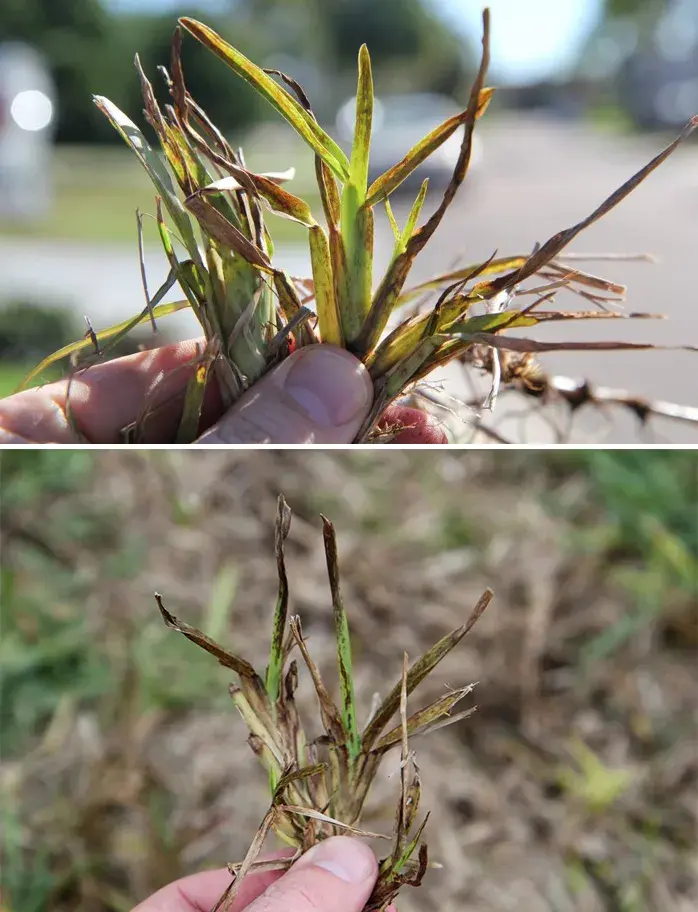
Early symptoms can include broken yellow or light-green streaks along otherwise green grass blades. More severe cases may develop dead tissue, thinning, and areas of turf loss. Symptoms can become more pronounced during fall and winter.
A brown patch alone does not confirm SCMV. Irrigation problems, insects, nutrient issues, and fungal diseases can also affect a lawn’s appearance. Some problems may occur together.
If you notice a change, take a close-up photograph of the grass blades and a wider photograph showing the affected area. Note when you first noticed it and whether the area is expanding. These observations give your landscape team useful starting information.
Concerned about changes in your lawn? Contact our team to discuss what you’re seeing.
How does it spread?
SCMV can move between lawns through infected plant sap and clippings carried on mowing and trimming equipment. Aphids can also transmit the virus, and infected planting material can introduce it into another landscape.
Removing plant debris and properly sanitizing equipment helps reduce the risk of mechanical spread. These precautions cannot guarantee that a property will remain virus-free.
Why testing matters
Visual symptoms can suggest a problem, but laboratory testing is needed to confirm SCMV. A diagnosis helps homeowners avoid choosing treatments or replacing turf based on an assumption.
Island Home Service offers turfgrass sample collection and laboratory testing coordination. Contact our office to discuss testing options, pricing, and scheduling for your property.
Can an infected lawn be treated?
There is currently no known cure that removes SCMV from an infected lawn. Fungicides do not control the virus.
If testing confirms SCMV and significant decline occurs, selecting a more resistant turf variety may become part of the plan. Replacement decisions should also consider your property’s sunlight, site conditions, and maintenance needs.
Before making a major lawn-care decision, speak with your landscape team about the findings and available options.
Questions about your lawn? Start with a conversation.
You do not need to diagnose the issue yourself. Tell us what has changed, and our team can help you understand the next step, including whether sample collection and testing are appropriate.
Ask IHS About Lawn Concerns & Testing
Call (239) 472-5247 or email info@islandhomeservice.com. When submitting the contact form, include your property address and describe the changes you have noticed.