
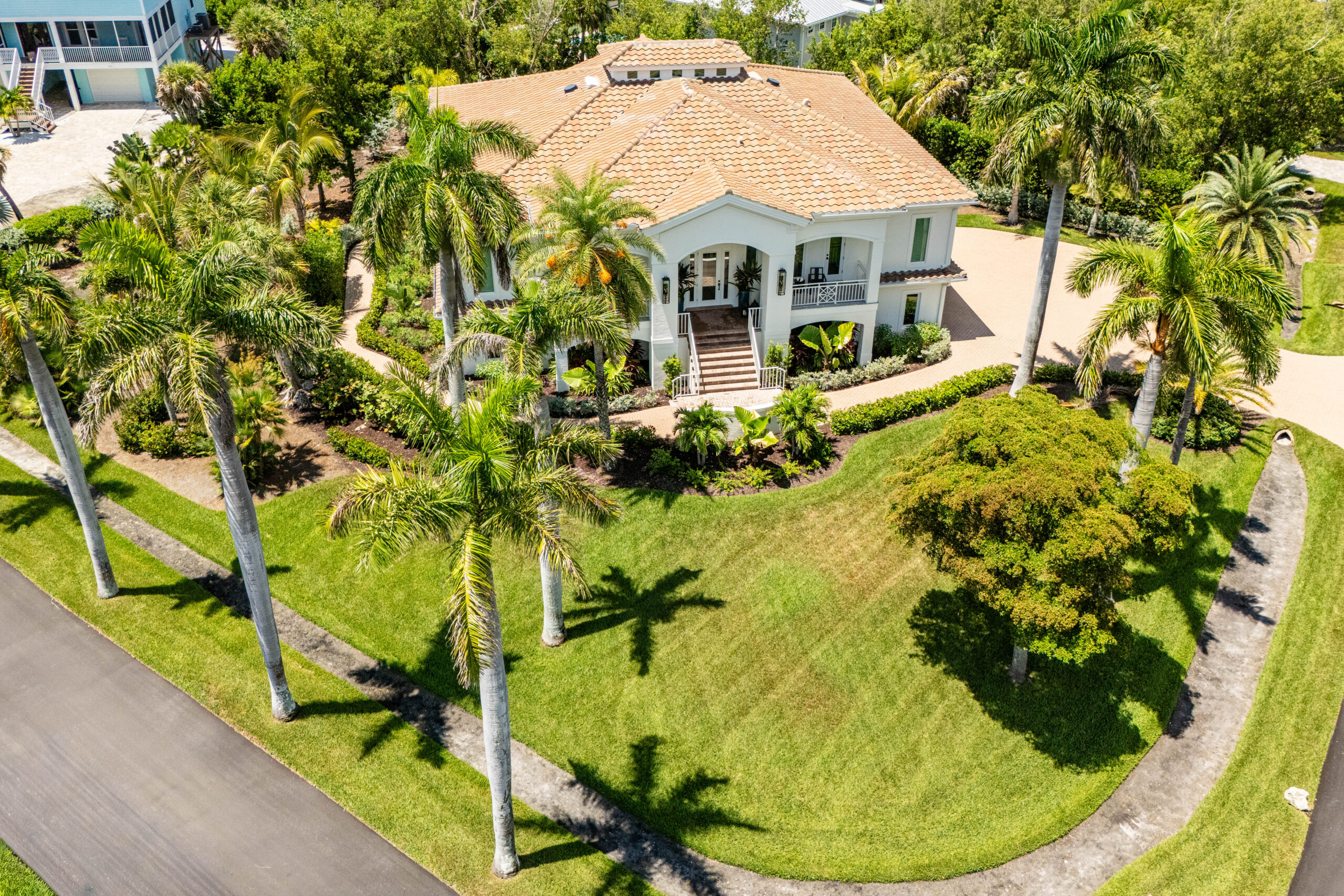
Lawn Fertilization Services in Fort Myers, FL
Key takeaways
- A Fort Myers fertilization calendar has to be calibrated to local seasonal restrictions, soil type and salt or irrigation exposure.
- Lee County Ordinance 08-08 prohibits nitrogen and phosphorus fertilizers from June 1 through September 30, so a compliant annual programme plans its applications before and after that window.
- The rules are not the same across the region. Sanibel and Collier County each run different restrictions, and a programme built for the mainland is not automatically compliant on the island.
- Fertilization paired with weed control and aeration addresses problems that fertilization alone cannot.
- We work on both the mainland and the barrier islands, which matters for owners holding property in more than one jurisdiction.
Why Work With Us
We understand the coastal turf environment specifically
We plan the programme around the ordinance rather than react to it
We serve estates and HOA communities, not only individual lawns
Tree and palm work sits under the same account
Common Problems We Solve
- Yellowing or thin turf despite regular watering. On the coast this is often an iron or magnesium deficiency driven by high-pH soil rather than a watering problem, and the wrong fertilizer makes it worse.
- Weed pressure that returns season after season. Dollarweed, chamberbitter and torpedo grass point to a mix of soil conditions and gaps in the weed control programme. Fertilization on its own does not suppress an established weed population.
- Patchy recovery after storms. Salt surge, standing water and physical damage all slow turf recovery. The first application after a storm has to support recovery without pushing stressed grass.
- Compacted turf on high-traffic common areas. Compaction cuts nutrient uptake. Aeration followed by a targeted application restores the soil structure that lets nutrients reach the root zone.
- Inconsistent service across two properties. Owners with a mainland house and an island house often find the island property gets whatever time is left over after the causeway crossing.

Our Process
Step 1
Property assessment and soil evaluation
Step 2
Programme design and scheduling
Step 3
Application and integrated treatments
Step 4
Monitoring, adjustment and reporting
| Fort Myers / Captiva (Lee County) | Sanibel (city) | Naples (Collier County) | |
|---|---|---|---|
| Ordinance | 08-08 | City ordinance | 11-24 |
| Summer restriction | June 1 – Sept 30 | July 1 – Sept 30 | No fixed dates |
| What triggers it | The calendar | The calendar | Storm Watch or Warning, or saturated soil |
| Distance from water | 10 ft | 25 ft | 10 ft (3 ft with deflector or drop spreader) |
| Annual nitrogen cap | — | 4 lb per 1,000 sq ft; max 1 lb per application | By grass: St Augustine 4–6, Bahia 2–4, Bermuda 5–7, Centipede 2–3, Zoysia 2.5–4.5 |
| Product composition | — | Phosphorus 2% or less, nitrogen 20% or less, at least 50% slow-release | — |
| Applicator requirement | — | — | FDACS state fertilizer licence; GI-BMP training required for licensure |
“—” indicates no requirement specified in that ordinance.
Three Jurisdictions, Three Rulebooks
Fort Myers property owners are covered by Lee County Ordinance 08-08, which prohibits fertilizers containing nitrogen or phosphorus from June 1 through September 30 and requires a ten-foot buffer between fertilized landscape and any body of water.
That much is reasonably well known. What is less well known is that the rule changes when you cross the causeway, and changes again when you cross into Collier County.
The practical consequence for anyone holding property in more than one of these places: a programme designed for a Fort Myers lawn is not compliant on Sanibel. Sanibel’s restriction starts a month later but runs tighter all year — phosphorus capped at 2 percent, nitrogen at 20 percent, at least half of it slow-release, no more than one pound of nitrogen per 1,000 square feet in any single application, and a twenty-five foot buffer from water rather than ten.
Collier County, meanwhile, has no summer date to work around at all — but stops work whenever soils are saturated, which through August is often, and caps annual nitrogen by grass variety.
We schedule around all three. For clients with a mainland house and an island house, that is not a convenience — it is the difference between a compliant programme and a fine.
Packages and Pricing
We do not publish flat-rate pricing for fertilization in Fort Myers, because the right programme depends on turf variety, lot size, current soil condition, weed pressure, which jurisdiction the property sits in, and whether aeration or palm nutrition needs to run alongside the turf work.
Tell us about the property and we will come back with a written programme recommendation and a quote. Dual-property owners can request a combined mainland-and-island assessment in a single conversation.
| Programme type | Typical scope | Best for |
|---|---|---|
| Annual turf fertilization | Applications timed around the applicable seasonal restriction; slow-release formulations | Homeowners who want a compliant programme they do not have to manage |
| Integrated turf care | Fertilization plus weed control and seasonal adjustment | Properties with persistent weed pressure or recurring deficiency symptoms |
| Estate / HOA programme | Multi-zone mapping, large-area application, written reporting | Boards and estate managers overseeing large or multi-site turf |
| Multi-jurisdiction programme | Separate compliant calendars and product specifications per property | Owners holding property in more than one of Lee County, Sanibel and Collier County |
| Post-storm recovery | Targeted assessment and stress-recovery application after tropical weather | Any property in the service area following a hurricane or tropical storm |
“—” indicates no requirement specified in that ordinance.
Who We Work With
HOA and community common areas.
Coastal estate turf
Owners of more than one property.
Bottom Line
Ready to Protect Your Turf Year-Round?
A good fertilization programme does not have to be complicated to manage. It just has to be right for the conditions and the rules the property is actually under. Whether you are a Fort Myers homeowner wanting a compliant annual programme, an HOA board building turf maintenance into a budget, or an owner with property on both sides of the causeway, we can take that work off your plate.
Use the contact form to tell us about the property. We will follow up to schedule an on-site assessment and put a written recommendation in your hands — no obligation.
Expert care rooted in island experience.
Frequently Asked Questions
Any time outside June 1 through September 30. Lee County Ordinance 08-08 prohibits fertilizers containing nitrogen or phosphorus during that window and requires a ten-foot buffer from any body of water year-round. We design the annual programme to use the permitted months fully, with an application timed to carry the lawn through the closed period and another as soon as it reopens.
A slow-release nitrogen formulation, usually with iron and micronutrient support. St. Augustine is the most common variety across Fort Myers and coastal Lee County, and it responds better to nutrients delivered steadily than in spikes. The high-pH soils common here often lock out iron and magnesium, which is why a soil reading comes before any product recommendation.
In most Fort Myers lawns, yes. Fertilization strengthens the turf you have but does not remove weeds that are already established. A pre-emergent stops seeds germinating and a post-emergent handles active infestations; running both on the correct schedule alongside the fertilization calendar works considerably better than treating nutrition and weeds as separate jobs.
Aeration is perforating the soil to relieve compaction and let water, air and nutrients reach the root zone. Your lawn probably needs it if applications have stopped producing the improvement you expect. Compaction is most common in high-traffic areas — HOA common spaces, pool surrounds, main entry corridors — and where it is the limiting factor, aeration should come before the next treatment cycle.
Yes, on a single account with one point of contact, but on two different calendars. Captiva falls under Lee County’s rules like the mainland; Sanibel is a separate city ordinance with a later start date, tighter product limits and a wider buffer from water. We coordinate both sites together and keep each one compliant with the rules that apply to it.
It raises soil sodium and interferes with nutrient uptake, particularly potassium and calcium. Properties nearer the Gulf — Sanibel, Captiva, Fort Myers Beach — need programmes that account for this, including periodic soil flushing and formulations that compensate for salt-related lock-out. We factor it into every coastal assessment.