
Not every irrigation problem announces itself with a broken pipe, flooded lawn or sprinkler shooting water across the driveway.
Some of the most damaging irrigation issues develop gradually—one sprinkler head, valve or poorly covered area at a time.
By the time brown turf, declining ornamentals or stressed plant material becomes obvious, the underlying irrigation problem may have existed for weeks.
That’s particularly important in Southwest Florida, where heat, seasonal rainfall, sandy soils and varying plant requirements make proper irrigation an essential part of maintaining a healthy landscape.
Here are seven common irrigation problems in Southwest Florida that property owners, HOA boards and property managers should know how to recognize.
1. Broken or Damaged Sprinkler Heads
A damaged sprinkler head can create two problems at once: insufficient water where it’s needed and wasted water where it isn’t.
Heads can become damaged by equipment, vehicles, normal wear or changes throughout the landscape.
Because the remainder of an irrigation zone may continue operating normally, one malfunctioning head isn’t always immediately noticeable.
Routine irrigation wet checks allow the system to be observed while it’s operating, making it easier to identify heads that are broken, clogged, misaligned or otherwise performing incorrectly.
2. Poor Irrigation Coverage
A sprinkler can be operating perfectly from a mechanical standpoint and still fail to properly water the intended landscape.
As landscapes mature, shrubs grow, tree canopies expand and planting beds change. A system that provided adequate coverage several years ago may no longer match the property that exists today.
Incorrect nozzles, misaligned heads and landscape obstructions can also create gaps in coverage.
The result may appear as isolated dry turf or declining plant material when the actual problem is water distribution.
This is one reason irrigation shouldn’t be treated as completely separate from professional landscape maintenance. The landscape team can identify visible changes above ground while irrigation diagnostics help determine whether water coverage is contributing to the problem.
3. Leaking Valves or Irrigation Lines
Not every irrigation leak creates an obvious pool of water.
Small underground leaks can waste water, reduce pressure and create excessively wet soil around turf and plant roots.
Some warning signs can include:
- Persistently wet landscape areas
- Unexplained changes in water pressure
- Erosion around irrigation components
- Zones performing differently than normal
- Plant material showing signs of excessive moisture
These conditions shouldn’t automatically be assumed to be irrigation-related, but they provide a reason to investigate the system further.
Identifying a leak early can help prevent unnecessary water loss while reducing the potential for landscape damage.
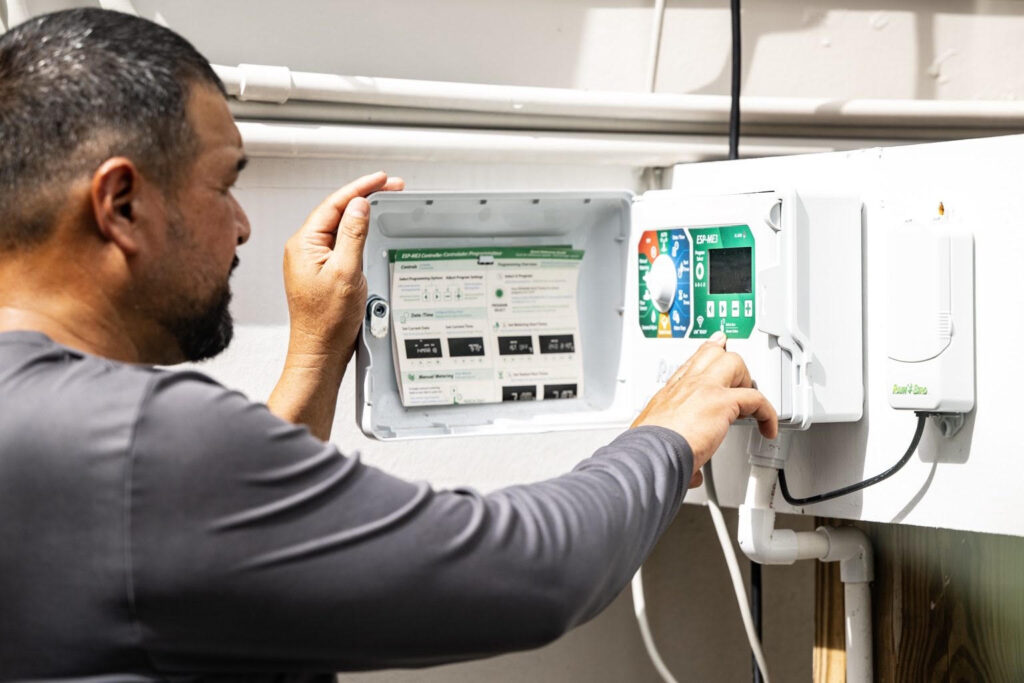
4. Incorrect Controller Programming
Southwest Florida landscapes don’t have identical irrigation requirements throughout the year.
Rainfall, temperature, daylight and plant demand change considerably between the dry and rainy seasons.
An irrigation controller programmed for one set of conditions can become inefficient when those conditions change.
Too much water can contribute to saturated soils and plant-health problems. Too little can create unnecessary stress on turf and ornamental material.
Professional irrigation management should therefore include evaluating controller programming and adjusting system operation according to seasonal conditions and the needs of the property.
A controller turning the system on successfully does not necessarily mean the landscape is being watered correctly.
5. Water Pressure Problems
Pressure affects how irrigation water is distributed throughout a zone.
Too little pressure can prevent sprinkler heads from achieving their intended coverage.
Too much pressure can contribute to misting and inefficient distribution, potentially allowing more water to be carried away by wind instead of reaching the intended landscape.
Pressure problems may affect multiple components simultaneously, which is another reason simply observing one sprinkler head doesn’t provide a complete picture of system performance.
A proper wet check evaluates how the entire zone behaves while operating.
6. Your Irrigation System No Longer Matches Your Landscape
Landscapes aren’t static.
Shrubs grow. Trees mature. Beds are expanded. Plant material is replaced. New palms are installed. Sod areas change.
The irrigation system needs to evolve with those changes.
When completing landscape enhancements, irrigation coverage should be evaluated as part of the project rather than treated as an afterthought.
For example, adding a new planting bed without considering irrigation may create an area that looks exceptional immediately after installation but struggles months later because the new material isn’t receiving appropriate coverage.
Likewise, mature shrubs can eventually obstruct spray patterns that worked perfectly when the plants were smaller.
7. Assuming a Running Irrigation System Is a Working Irrigation System
This may be the most common misconception.
Seeing sprinklers running doesn’t confirm that the landscape is receiving water correctly.
A comprehensive irrigation wet check evaluates how individual zones and components actually perform.
Depending on the property and system, that may involve observing:
- Sprinkler head operation
- Spray patterns
- Coverage
- Pressure
- Leaks
- Valves
- Zone performance
- Controller programming
- Overspray
- Areas receiving too much or too little water
For larger residential estates, HOA communities and commercial properties, routine irrigation monitoring can help identify smaller deficiencies before they contribute to declining turf, plant replacement or unnecessary water use.
Your Landscape Can Reveal Irrigation Problems
The landscape itself frequently provides the first clues that something isn’t performing correctly.
Recurring dry patches, constantly wet areas, inconsistent turf color or declining plant material can indicate that further investigation is necessary.
The important part is avoiding assumptions.
Brown turf doesn’t automatically mean it needs more water, just as declining plant material doesn’t automatically mean there is a pest problem.
Irrigation coverage, drainage, nutrition, environmental stress, disease and other conditions can produce similar symptoms.
That’s why a comprehensive approach to turf, shrub and ornamental care works best when the landscape and irrigation systems are evaluated together.
Why Routine Irrigation Wet Checks Matter in Southwest Florida
For Southwest Florida properties, irrigation isn’t simply another mechanical system.
It directly supports the health and appearance of turf, palms, shrubs, ornamentals and newly installed plant material.
Routine wet checks create an opportunity to identify problems while they’re still irrigation problems—before they become landscape replacement problems.
For HOA boards and community association managers, this can also provide greater visibility into what’s happening throughout a larger property.
Rather than waiting for a resident complaint or visible decline, irrigation performance can be monitored as part of the property’s broader landscape maintenance program.
This is particularly valuable for communities and larger properties where a single irrigation system may contain numerous zones serving very different landscape environments.
Irrigation Should Work With the Entire Landscape
The strongest landscape programs don’t treat irrigation, maintenance and plant health as unrelated services.
They work together.
At Island Home Service Landscaping, irrigation management is integrated into our broader approach to maintaining Southwest Florida landscapes.
Our team provides irrigation diagnostics, routine wet checks, repairs and system optimization alongside comprehensive landscape maintenance, enhancements and plant care.
For examples of how these services come together across the properties we serve, explore our Southwest Florida landscape projects.
Is Your Irrigation System Protecting Your Landscape?
If you’re seeing unexplained dry areas, excessive moisture, inconsistent turf performance or recurring plant decline, the irrigation system may be worth evaluating before the problem becomes more expensive.
Whether it’s a luxury residence, HOA community or managed commercial property, proactive irrigation monitoring can help protect the landscape investment surrounding it.
Schedule an irrigation and landscape evaluation with Island Home Service Landscaping.