
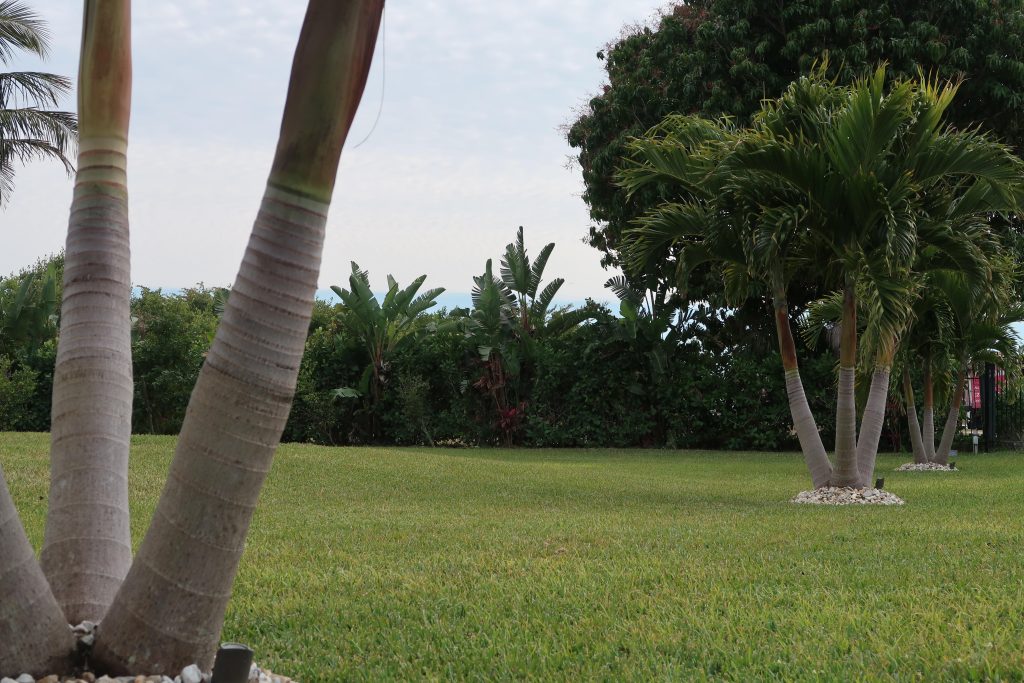
In October, it is easy to look across a lawn in Southwest Florida and assume every brown spot needs fertilizer or new sod. But similar-looking patches can have very different causes. One area may be missing water because a sprinkler head is blocked. Another may be staying too wet. A third may have an insect or disease problem. Replacing the grass before finding the cause can mean paying to solve the same problem twice.
This is a useful time to investigate. The National Weather Service places the typical end of Southwest Florida’s rainy season around October 15, though the change does not happen on a fixed day every year. As regular afternoon rain becomes less dependable, weak spots in a property’s irrigation and drainage often become easier to see. At the same time, cooler, damp periods later in the season can favor certain turf diseases.
Here is a practical way to work through a brown patch before approving a treatment or a sod replacement.
1. Map the Pattern Before Naming the Problem
Start with a photo and a location. Is the patch beside a sidewalk, along a building, at the end of an irrigation zone, under a tree, or in a low spot that holds water? Is it expanding, or has it looked the same for weeks? Is nearby turf the same species?
The shape is a clue, not a diagnosis. A crisp dry strip beside pavement may suggest a coverage issue, while a recurring patch in a low area may point toward excess water or poor drainage. A spreading yellow-to-brown area calls for a closer look at the grass itself.
Ask the landscape team to mark the location on a site map and photograph it again after the next service. That gives the manager and board a way to tell whether the problem is improving.
2. Run the Irrigation Zone and Watch What Actually Happens
Do not rely on the controller schedule alone. Run the zone serving the damaged area and check whether every head rises, rotates, and reaches the intended turf.
Look for heads blocked by shrubs, tilted heads, clogged nozzles, overspray onto pavement, and dry gaps between spray patterns. Then compare the soil in the affected area with healthy turf nearby.
Too little water and too much water can both cause decline. A zone that runs for a long time can still have a dry corner, while a low spot can remain saturated after the rest of the lawn drains.
UF/IFAS recommends calibrating irrigation for adequate coverage and adjusting frequency and timing to conditions and applicable local rules. The right next step may be a head adjustment or repair, a schedule change, or a drainage review—not a blanket increase in watering time.
For a CAM or board: Ask for a brief irrigation report that names the affected zone, describes the coverage problem, and separates included adjustments from repairs that need approval.
3. Check for Pests Before Approving an Insect Treatment
Southern chinch bugs are a concern in St. Augustinegrass, but brown or yellow turf alone does not prove they are present.
UF/IFAS notes that dehydration, root problems, disease, and other insects can produce similar symptoms. The technician should inspect the edge where damaged turf meets healthy turf and document what was found before recommending treatment.
That distinction matters for a property budget. An insecticide will not fix a broken irrigation head, and a sprinkler adjustment will not address an active pest infestation.
If treatment is proposed, ask which pest was identified, where it was found, what area will be treated, and how the team will check the result. Confirm whether that treatment falls within the maintenance agreement or requires separate authorization.
4. Consider Disease When Conditions and Symptoms Fit
Large patch, sometimes called brown patch, affects warm-season grasses including St. Augustinegrass and zoysiagrass.
UF/IFAS says it is most likely observed from November through May when temperatures are below 80°F, especially when leaves stay wet for extended periods. It can form expanding yellow or brown patches, sometimes with a darker outer edge.
Those signs still need a qualified diagnosis; other damage can look similar.
If disease is suspected, ask the landscape team to review irrigation timing, frequency, and how long foliage remains wet before reaching for a fungicide.
UF/IFAS emphasizes water and nutrient management as part of disease control. A fungicide, when appropriate, addresses spread; it does not instantly turn damaged leaves green again.
5. Decide Whether the Turf Can Recover Before Ordering Sod
After the cause is corrected, assess what living grass remains. If healthy runners are still present and the conditions are favorable, the area may fill in with time and proper care.
If the turf is dead or bare, sod may be appropriate—but the irrigation, drainage, pest, or disease issue should be addressed first.
For a sod proposal, ask for the measured square footage, turf type, site preparation, irrigation plan during establishment, and who will monitor the new area.
UF/IFAS notes that sod needs good soil contact and a different watering schedule while it establishes. A replacement price without those details leaves the board guessing about what it is buying.
Five Questions to Ask Your Landscape Provider
When a brown area appears, send the contractor a photo and ask:
- What turf species is affected, and how large is the damaged area?
- What did you observe during an irrigation zone check and a soil moisture check?
- Were insects or disease confirmed, suspected, or ruled out? What evidence supports that assessment?
- What correction can be made under the current contract, and what needs a separate quote?
- When will you revisit the area and send an update with photos?
A short written answer gives managers a record they can share with a board. It also makes it easier to distinguish a new problem from a patch that has been slowly declining for months.
The Takeaway for Southwest Florida Properties
Fall is a good time to catch irrigation gaps and lingering wet areas before the drier months.
Treat a brown patch as a site-specific problem to investigate, not an automatic order for fertilizer, pesticide, or sod. The most useful first visit combines turf inspection, an irrigation check, photographs, and a clear recommendation for what to do next.
Island Home Service Landscaping works with associations, commercial properties, and homeowners across Southwest Florida. If a lawn area keeps declining or the cause is unclear, we can walk the property, review the irrigation and turf conditions, and put together a practical plan for the affected area.